Container Home Ideas: Sizes, Layouts and What to Plan For


Quick answer: Load the truck and trailer the way you’ll travel, pull onto a CAT Scale with the steer axle on platform 1, the drive axle on platform 2 and the trailer axles on platform 3, and get a ticket. Then unhitch and weigh the truck alone with the same people and gear. Trailer weight is the combined total minus the truck alone, and tongue weight is roughly the hitched truck’s axle total minus the truck alone.
A weigh ticket turns guesses about payload and tongue weight into real numbers you can check against your GVWR, GAWR and GCWR. Here’s how to do it and what to do with the results.
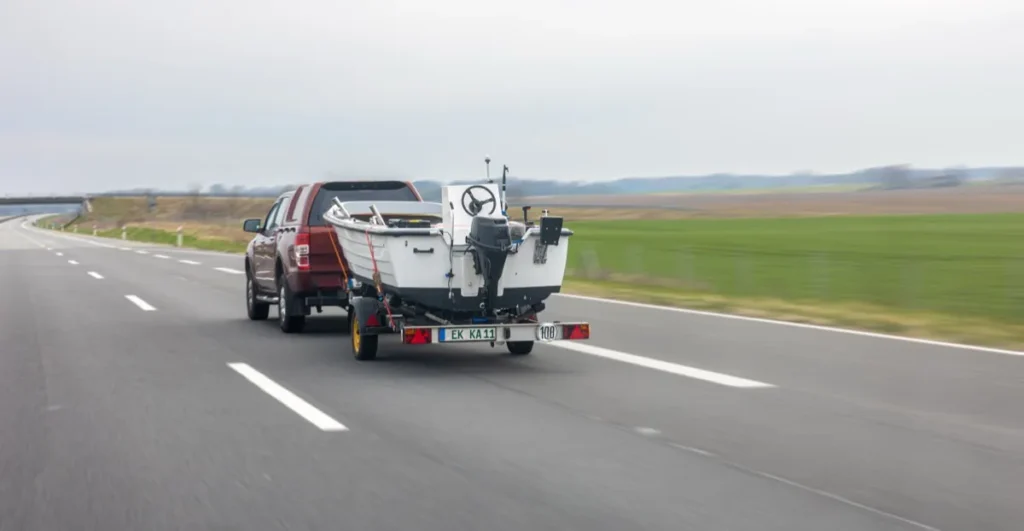
CAT Scales have three platforms. CAT’s “How to Weigh” page gives the positions for a truck and trailer, truck and fifth wheel, or truck and boat:
| Platform | What goes on it |
|---|---|
| 1 | Truck steer (front) axle |
| 2 | Truck drive (rear) axle |
| 3 | Trailer axle(s), usually |
CAT says the whole vehicle must be on the scale. It also notes that the scale reports axle weights and a gross weight, not individual wheel or corner weights, and that corner weighing isn’t permitted.
For starting the weigh, CAT’s FAQ (in its answer for military do-it-yourself moves) describes the routine: no appointment is needed, you push the intercom button to start, a cashier takes your information, and you go inside to get your ticket. CAT also offers the Weigh My Truck app, which it describes as a way to weigh and pay from your smartphone without leaving the truck; the app page is aimed at professional drivers. If you’re unsure about anything, CAT lists a 24-hour help desk at 1-877-CAT-SCALE (228-7225), ext. 6.
Weigh the rig exactly as you drive it, with any weight-distribution hitch connected and adjusted. This ticket gives you the front axle, rear axle, trailer axles and the gross combination weight (GCW).
Unhitch, then weigh just the truck with the same people, fuel and cargo aboard. You need this number to work out the trailer’s weight and the tongue weight.
Ford’s guide explains that a weight-distributing hitch shifts some load from the truck’s rear wheels to the other wheels of the truck and trailer. So with the bars connected, the truck’s axle total includes less than the full tongue weight. For a closer tongue weight estimate, you can add a hitched pass with the bars released and use that truck total in the tongue weight math.
CAT Scale’s FAQ lists a full weigh at $15.25 and a reweigh at $5.25. The reweigh price applies only within 24 hours of the full-price ticket, on the same scale, for the same vehicle (tractor and trailer), when you show the original ticket. Because a truck-only weigh isn’t the same combination, ask the cashier whether it counts as a reweigh or a new weigh. Prices are as listed on CAT’s site at the time of writing and may change.
From your two tickets:
The numbers below are made up for illustration only.
| Ticket | Platform 1 (steer) | Platform 2 (drive) | Platform 3 (trailer) | Gross |
|---|---|---|---|---|
| Truck + trailer hitched | 3,700 lb | 4,300 lb | 9,600 lb | 17,600 lb |
| Truck alone | 3,800 lb | 3,100 lb | – | 6,900 lb |
Continuing the hypothetical example, with made-up ratings:
| Check | Measured | Rating (example) | Result |
|---|---|---|---|
| Front axle vs. front GAWR | 3,700 lb | 4,400 lb | OK |
| Rear axle vs. rear GAWR | 4,300 lb | 4,800 lb | OK |
| Truck GVW vs. GVWR | 8,000 lb | 8,500 lb | OK |
| GCW vs. GCWR | 17,600 lb | 20,000 lb | OK |
| Trailer weight vs. trailer GVWR | 10,700 lb | 11,000 lb | OK |
| Platform 3 vs. trailer axle ratings combined | 9,600 lb | 10,400 lb (2 × 5,200) | OK |
Platform 3 weighs both trailer axles together, so the ticket won’t show how the load splits between them.
For tongue weight, Ford’s 2026 guide says that for conventional trailers over 2,000 lb, tongue load should be 10% of loaded trailer weight, and for fifth-wheel trailers, king pin weight should be 15%, with vehicle-specific recommendations on each model’s pages. Check your own truck, trailer and hitch manufacturers’ guidance. Ford also reminds owners that tongue or pin weight must not push the truck over its GVWR or rear GAWR.
Plug your ticket numbers into our RV weight calculator and tongue weight calculator, or check remaining payload with the payload calculator.
After making changes, weigh again. Keep the tickets: CAT notes that printed tickets can’t be altered because they’re legal documents.
CAT says its scales are set to a 2,000 lb threshold and weigh vehicles from 2,000 to 200,000 lb. If your vehicle may be under 2,000 lb, CAT asks you to call its help desk.
No. CAT says its scales give axle weights and a gross weight, not individual wheel or corner weights.
CAT’s FAQ lists $15.25 for a full weigh and $5.25 for a qualifying reweigh within 24 hours on the same scale. Prices may change.
Not as a listed service. The two-weigh method above gives an estimate. Ford’s guide describes measuring actual tongue load by unhitching and placing only the tongue on a scale at hitch-ball height.
Weigh the way you travel. If you sometimes travel with full tanks, weigh that way to see your worst case.
This article is general information. Scale procedures and prices are set by CAT Scale and may change; follow the scale operator’s instructions. Always follow your vehicle, trailer and hitch manufacturers’ ratings and instructions, and check your state’s laws on weights and towing.