Container Home Ideas: Sizes, Layouts and What to Plan For


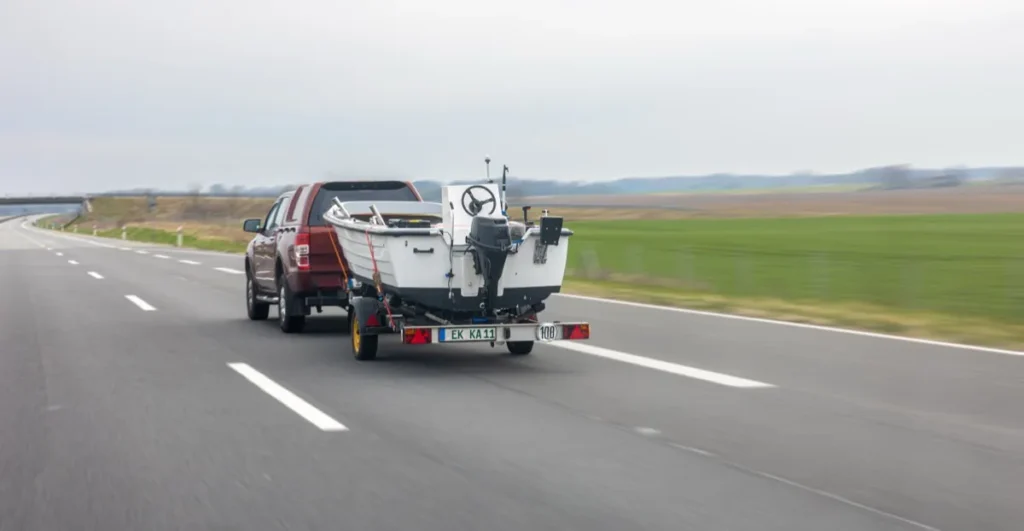
Quick answer: trailer sway is the side-to-side swinging of a trailer behind the tow vehicle. The usual triggers are too little tongue weight, cargo loaded too far back or unevenly, too much speed, crosswinds and the air push from passing trucks, and incorrect tire pressure or hitch setup. If sway starts and your trailer has electric brakes with a brake controller, Ford’s 2026 towing guide says to apply the trailer brakes by hand with the controller rather than the tow vehicle’s brake pedal, which can increase sway. Without a controller, follow your owner’s manual.
Most sway problems are set up before you leave the driveway. Below: what causes it, how to prevent it, and what manufacturers say to do when it happens.
Sway is a side-to-side movement of the trailer that the driver feels as a tug or oscillation through the steering wheel. Equal-i-zer, a hitch manufacturer, points out that travel trailers are especially prone to it because they have tall, long, flat sides on a relatively light frame, so wind and air pressure have a big surface to push on. Once the trailer starts swinging, a small movement can grow if the setup or the driving conditions keep feeding it.
Tongue weight is the part of the trailer’s weight that presses down on the hitch ball. Ford’s 2026 RV & Trailer Towing Guide warns that too little tongue load can reduce rear-wheel traction and cause instability, which may show up as tail wagging or jackknifing. Too much is also a problem: it can press the rear of the vehicle down and lift the front, reducing traction, steering response and braking.
| Trailer | Ford 2026 guide | Equal-i-zer guidance | Example |
|---|---|---|---|
| Conventional trailer up to 2,000 lb | Tongue load not to exceed 200 lb | 10 – 15% of loaded trailer weight | 1,800 lb trailer: max 200 lb (Ford) |
| Conventional trailer over 2,000 lb | 10% of loaded trailer weight | 10 – 15% of loaded trailer weight | 5,000 lb trailer: 500 lb (Ford) |
| 5th-wheel trailer | King pin weight 15% of loaded trailer weight | Higher than bumper-pull trailers | 11,500 lb trailer: 1,725 lb (Ford) |
Ford also says to check the specific vehicle pages for tongue load recommendations with its factory hitch receivers, so use your own vehicle’s figures. To run the numbers for your trailer, use our tongue weight calculator.
Where the cargo sits matters as much as how much there is. Ford’s basic towing information recommends:
Equal-i-zer’s loading guide adds that uneven side-to-side loading reduces trailer stability and contributes to sway, and that you should measure the actual tongue weight instead of relying on rules of thumb. Another Equal-i-zer article notes that brochure dry weights don’t account for full water tanks or gear stored toward the rear.
Equal-i-zer calls reducing speed the single most powerful adjustment a driver can make, because it lowers the aerodynamic forces on the trailer and gives the tires more time to respond. Small setup errors also tend to compound at highway speeds. Ford’s guide does not give a single “safe” towing speed, so follow posted limits, your state’s rules for towing, and your owner’s manual.
A crosswind pushes against the broad side of a trailer. Equal-i-zer names the wind push from an oncoming semi on a two-lane highway as one major cause of sway, and notes that sway often shows up in crosswinds, when a semi passes and on long sweeping curves. In high winds or severe weather, Equal-i-zer suggests it may be best not to travel at all.
Ford’s guide warns that underinflated tires get hot and may fail, which can lead to loss of vehicle control, while overinflated tires may wear unevenly and compromise traction and stopping. Ford says to check tires often against the recommended cold inflation pressures. Use the pressures on your vehicle’s certification label and on the trailer’s tire placard or sidewall, not a generic number. Ford also sells a trailer tire pressure monitoring kit that alerts you if a trailer tire is low or losing pressure.
Even a good weight distribution hitch can leave a trailer unstable if it is set up wrong. Equal-i-zer lists errors such as a wrong washer stack, an incorrect head tilt, spring bars that do not run parallel to the trailer frame, and fasteners that are not torqued properly.
Manufacturers agree on a few points. Follow your own vehicle and brake controller manuals, because procedures can differ by vehicle.
Too little tongue weight and poor loading are frequent setup causes. Ford warns that too little tongue load can cause instability such as tail wagging or jackknifing; wind, passing trucks and speed then trigger the movement.
Ford’s 2026 guide uses 10% of loaded trailer weight for conventional trailers over 2,000 lb (200 lb max for lighter trailers). Equal-i-zer recommends 10 – 15%. Always check your own vehicle’s limits.
If your trailer has electric brakes and a brake controller, Ford says to apply the trailer brakes by hand with the controller rather than the tow vehicle’s brakes, since pressing the tow vehicle’s brakes can increase sway. If you don’t have a controller, follow your vehicle’s owner’s manual.
Not on its own in most cases. CURT says most of its weight distribution hitches are meant to be used with a sway control unit, though some hitches combine both functions.
This article is general information, not a substitute for your vehicle, trailer, hitch and brake controller manufacturers’ ratings and instructions. Always follow your own owner’s manual, stay within all weight ratings, and check your state’s towing laws.