Container Home Ideas: Sizes, Layouts and What to Plan For


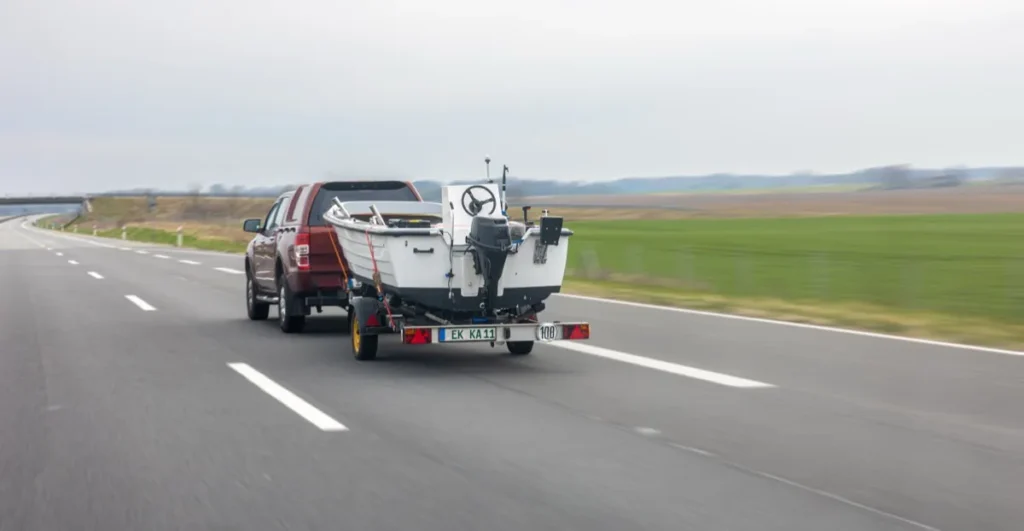
Quick answer: to hitch a bumper-pull trailer, confirm the ball matches the coupler, back the vehicle straight up to the tongue, lower the coupler onto the ball, close the latch and lock it with a pin, then lift the tongue slightly to test it. Cross the safety chains under the tongue, attach the breakaway cable, retract the jack, plug in the wiring and test every light and the trailer brakes before you drive.
The checklist below is based on CURT’s hook-up steps and Ford’s 2026 RV & Trailer Towing Guide, plus a few general checks. Your own vehicle, hitch and trailer manuals come first.
The hitch ball must be the same size as the trailer coupler. Ford sells hitch balls in three common sizes, 1-7/8 in, 2 in and 2-5/16 in, which shows why you cannot assume one ball fits every trailer. Check the size marked on your coupler and on the ball. CURT’s pre-towing checklist also calls for the ball to be properly torqued onto the ball mount and the ball mount to be secured in the receiver with a hitch pin or lock.
Ford’s guide reminds owners that hitch receivers do not include a ball or ball mount, and that you are responsible for getting the proper ball, mount and other equipment for the trailer and load. Ford receivers carry a label showing their weight-carrying and weight-distributing capacities. Every part of the chain, from receiver to ball mount, ball, coupler and safety chains, needs to be rated for your trailer.
Ford’s weight distribution setup starts by leveling the loaded, unhitched trailer (level or slightly nose down) with the tongue jack. Ford’s ball mounts can be used in a raised or dropped position to match trailer coupler height, and for a weight distribution setup Ford says to set the ball at the same height as the trailer coupler (with the trailer unhitched). Use our hitch drop calculator to work out how much drop or rise you need.
Know your loaded tongue weight before you hitch up. Ford’s 2026 guide uses 10% of loaded trailer weight for conventional trailers over 2,000 lb, and a maximum of 200 lb for trailers up to 2,000 lb. Our tongue weight calculator does the math.
Ford’s 2026 guide says to always use safety chains when towing. They keep the trailer connected to the vehicle if the coupler or ball separates. Ford’s instructions:
CURT describes crossed chains as a cradle that catches the coupler if it comes loose, and says each safety chain assembly must meet or exceed the gross trailer weight.
Ford’s guide says the trailer must have lights that meet all applicable regulations, and that the trailer lighting should not be wired directly into the vehicle’s lighting system; use the correct harness, wiring and relays. Ford notes that a 4-pin harness does not support trailers with electric brakes, while a 7-pin harness does. If a light fails during your check, CURT suggests using a circuit tester at the vehicle-to-trailer connection to see whether the vehicle is sending a signal.
Ford points out that a tow vehicle’s brakes are rated for its own Gross Vehicle Weight Rating, not for the combined weight with a trailer, and recommends separate functional brakes for trailers weighing more than 1,500 lb loaded. Many states require trailer brakes above a set weight, so check your state’s rules.
CURT’s checklist says the brake controller should be working and adjusted for the trailer’s weight. Follow your controller’s manual for setting gain.
If the trailer is wider than your vehicle, standard mirrors may not show what is beside and behind it. Ford’s telescoping trailer tow mirrors extend out to increase your range of vision when towing. Mirror requirements vary, so check your state’s rules.
A weight distribution hitch adds steps: Ford’s 2026 guide describes measuring front fender height unhitched, hitching without the spring bars, then adjusting the bars to a target height before completing the coupler latching, electrical connections, safety chains and emergency brake attachments. See weight distribution hitch explained. 5th-wheel and gooseneck hitches use a different procedure, so follow the hitch maker’s instructions.
| Check | OK? |
|---|---|
| Ball size matches coupler; ball torqued; ball mount pinned in receiver | |
| Coupler fully seated, latch closed and pinned or locked | |
| Safety chains crossed under the tongue, not dragging | |
| Breakaway cable attached to the tow vehicle | |
| Jack fully retracted, chocks removed | |
| Plug seated; turn, brake, running and hazard lights work | |
| Brake controller working and adjusted for the trailer | |
| Mirrors adjusted; tire pressures checked cold |
Ford also recommends practicing turning, stopping and backing in an area away from traffic before a trip, and stopping after about 50 miles to recheck the hitch attachment, lights and electrical connections, and trailer lug nuts.
Yes. Ford’s 2026 towing guide says to cross the chains under the trailer tongue so the tongue does not contact the ground if the trailer separates, with only enough slack for full turns.
Close the latch, insert the pin or lock, then raise the tongue slightly with the jack. CURT says that if the coupler comes off the ball, it was not seated properly.
The size that matches your trailer’s coupler. Common sizes include 1-7/8 in, 2 in and 2-5/16 in. Check the marking on the coupler and make sure the ball’s rating covers your trailer.
CURT’s checklist says it should be securely attached to the tow vehicle. Follow your trailer and brake system instructions for the exact attachment point.
This checklist is general information. Always follow your vehicle, trailer, hitch and brake controller manufacturers’ ratings and instructions, stay within every weight rating, and check your state’s laws on trailer brakes, lighting, safety chains and mirrors.