Container Home Ideas: Sizes, Layouts and What to Plan For

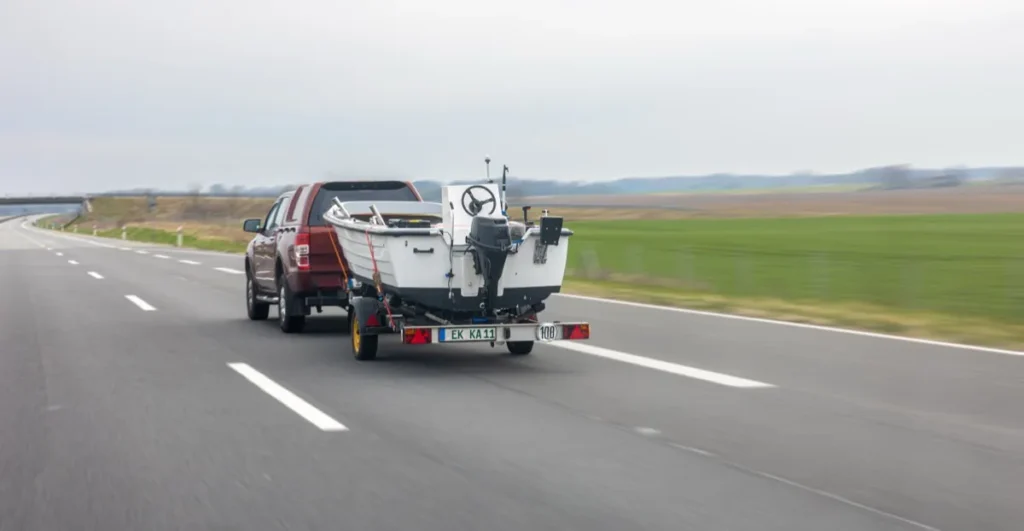
Quick answer: GVWR is the most a single loaded vehicle (or trailer) may weigh. GAWR is the most one axle may carry, measured where the tires meet the ground. GCWR is the most the loaded truck and loaded trailer may weigh together. You find GVWR and GAWR on the certification label (driver’s door edge or door-latch pillar on a truck, forward half of the left side on a trailer), and GCWR in the manufacturer’s towing charts or owner’s manual.
All three ratings are values set by the vehicle or trailer manufacturer. Here is what each one means, where to read it, and how to check your rig against all of them.
Federal motor vehicle safety rules (49 CFR 571.3) define the terms in one line each. Paraphrased:
The same section defines curb weight as the vehicle with standard equipment and full fuel, oil and coolant, and unloaded vehicle weight as the vehicle with all operating fluids but without cargo or occupants.
Ford’s 2026 RV & Trailer Towing Guide puts the same ideas in plainer terms: GVWR is the maximum allowable weight of the fully loaded vehicle including passengers and cargo, GAWR is the maximum weight to be carried by a single axle (front or rear), and GCWR is the maximum allowable weight of the towing vehicle and loaded trailer, including all cargo and passengers.
Every rating has a matching measured weight. The rating is the limit; the measured weight is what the scale says today.
| Rating (limit) | Actual weight | What it covers |
|---|---|---|
| GVWR | GVW | One vehicle: curb weight plus cargo, passengers and (when towing) tongue weight |
| GAWR (front, rear) | GAW | The load on one axle |
| GCWR | GCW | Loaded truck plus loaded trailer |
Ford’s guide stresses that GVW is not a specification: it is the weight you get when the fully loaded vehicle is driven onto a scale. Ford also counts the trailer’s tongue load or king pin weight as part of the truck’s cargo weight. Ford defines payload as GVWR minus base curb weight, so every pound of tongue weight, people and gear comes out of that number.
Ford’s simple rule set: GVW must not exceed GVWR, the load on each axle must never exceed its GAWR, and the measured GCW must never exceed the GCWR.
Under 49 CFR 567.4, every manufacturer must permanently attach a certification label. On vehicles other than trailers and motorcycles it goes on the hinge pillar, door-latch post or the door edge next to the driver’s seat (with fallback locations if those don’t work). The label must list, in order:
The rule also says the GVWR on the label can’t be lower than the unloaded vehicle weight plus the rated cargo load plus 150 lb for each designated seating position.
Vehicles with a GVWR of 10,000 lb or less (except motorcycles) also carry a tire and loading information placard under FMVSS No. 110 (49 CFR 571.110), normally on the driver’s side B-pillar. It shows the statement “the combined weight of occupants and cargo should never exceed” a set number of pounds, the seating capacity, the recommended cold tire pressures, and the original tire size. That occupant-and-cargo number is a quick payload check before you hitch up.
Under 49 CFR 567.4, a trailer’s certification label must be on the forward half of the left side, readable from outside without moving any part of the trailer. It carries the same core items, including GVWR and the GAWR for each axle. FMVSS No. 110 also requires most trailers to have a placard near that label with a cargo capacity statement (“the weight of cargo should never exceed” a set number of pounds). For RV trailers, full propane tanks count in the unloaded weight, and on-board fresh water is treated as cargo.
GCWR is not on the list of required certification-label items in 49 CFR 567.4. Ford’s 2026 guide tells owners to get GCWR from the Trailer Towing Selector charts for each vehicle or from the owner’s manual. Other brands publish it in their own towing guides and manuals.
You must stay under all of them at once. Being under GCWR does not mean you’re under GVWR, and being under GVWR doesn’t guarantee each axle is within its GAWR.
The Federal Motor Carrier Safety Administration uses a slightly different GCWR definition in 49 CFR 390.5 for its commercial vehicle rules: the greater of the manufacturer’s value shown on the FMVSS certification label, or the sum of the GVWRs (or actual weights) of the power unit and towed unit(s). If you tow for business, check how FMCSA and your state classify your combination.
The numbers below are made up for illustration only. Use the ratings on your own labels and charts.
Suppose a half-ton pickup has these ratings: GVWR 7,050 lb, front GAWR 3,900 lb, rear GAWR 4,150 lb, GCWR 17,000 lb. The travel trailer has a GVWR of 9,000 lb. The owner weighs the rig loaded for a trip, with the family and gear aboard:
| Weighing | Front axle | Rear axle | Trailer axles | Total |
|---|---|---|---|---|
| Truck + trailer hitched | 3,500 lb | 3,400 lb | 7,200 lb | 14,100 lb |
| Truck alone (same people and gear) | 3,580 lb | 2,520 lb | – | 6,100 lb |
The lesson: this rig has plenty of GCWR left but almost no payload left. Adding a 200 lb generator to the truck bed would put it over GVWR even though the combination is far below GCWR. To run your own numbers, try our payload calculator and towing capacity calculator, and check tongue weight with the tongue weight calculator.
No. GVWR limits the truck itself, including tongue weight and everything inside it. Towing capacity (trailer weight rating) is a separate number from the manufacturer’s towing charts.
Usually not on the door label. Federal label rules require GVWR and GAWR but not GCWR. Check your manufacturer’s towing guide or owner’s manual; Ford, for example, lists it in its Trailer Towing Selector charts.
Yes. Ford’s guide counts tongue load or king pin weight as part of the truck’s cargo weight, so it reduces your available payload.
Federal rules put the trailer certification label on the forward half of the left side, readable from outside. The tire and cargo placard is required to be nearby.
No. Each limit applies on its own. Ford says the total load on each axle must never exceed its GAWR.
This article is general information, not engineering or legal advice. Always follow the ratings and instructions from your vehicle, trailer and hitch manufacturers, never exceed any listed rating, and check your state’s laws on weights, brakes and licensing.